
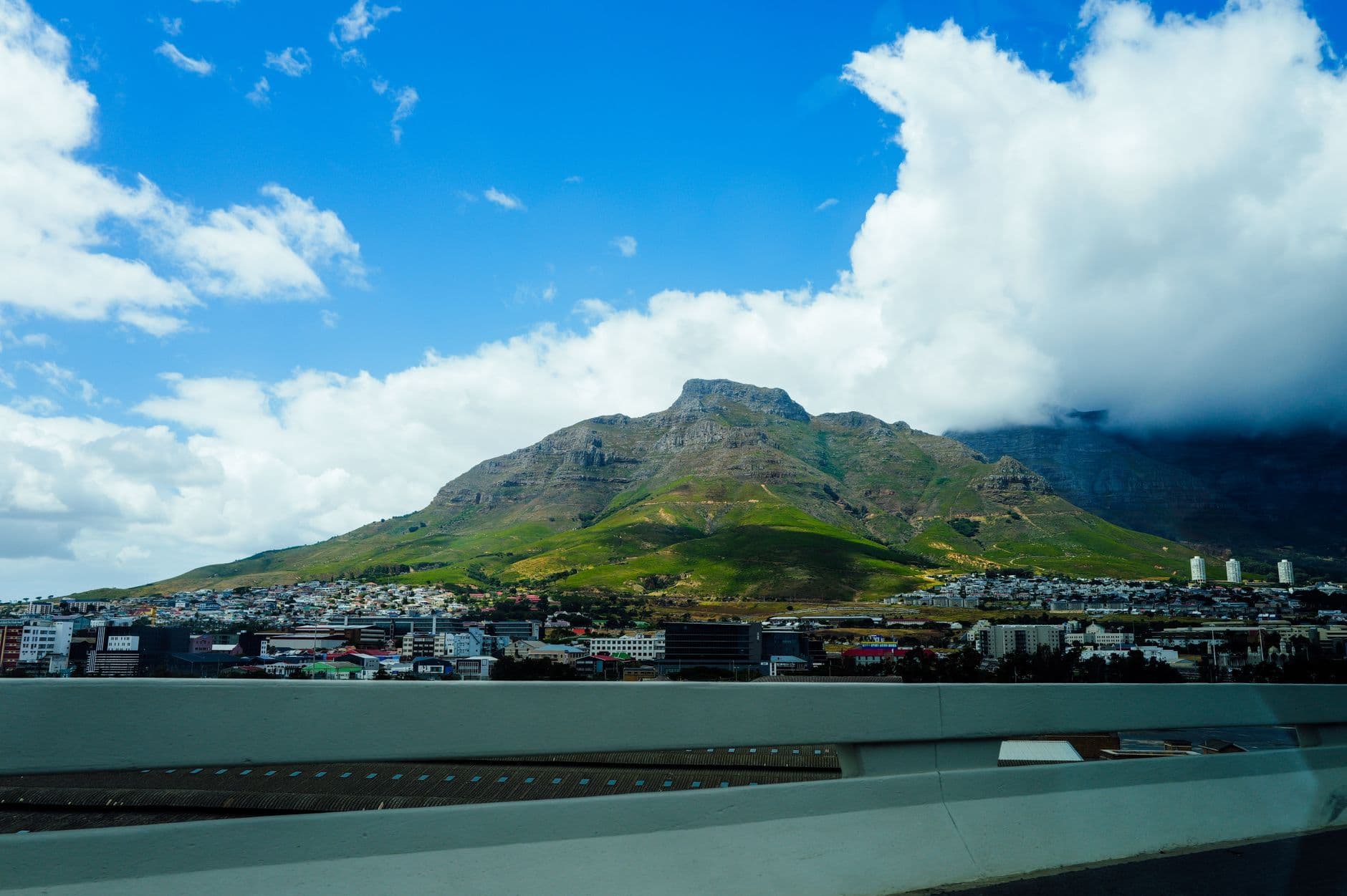
South Africa
Safaris, oceans and cities at Africa’s edge
- Cities published
- 0
- Population
- 63M
- Area
- 1,221,037 km²
- Time zones
- UTC+2
- Official languages
- 12 official languages
- Capital
- Pretoria (administrative), Cape Town (legislative), Bloemfontein (judicial)
The cities
Content coming soon.
South Africa travel guide
South Africa combines vast wildlife reserves, two oceans, high plateaus, vineyards and cities with strikingly different identities. A trip can alternate safaris in Kruger National Park, the scenic Garden Route coast, the Drakensberg mountains and the Cape winelands. Tourism infrastructure is well developed, but the distances call for careful itinerary planning.
Experiences vary greatly from one region to another: Cape Town offers coastal scenery and museums, Johannesburg tells the story of the country’s political and urban history, while KwaZulu-Natal brings together subtropical beaches and Zulu culture. The country suits both two- or three-week self-drive itineraries and trips focused on safaris, hiking, food and wine or whale watching.
Geography
The country stretches between the Atlantic and Indian oceans, with around 2,800 kilometres of coastline. Much of South Africa consists of an inland plateau, separated from the coastal plains by the Great Escarpment; the Drakensberg rise above 3,000 metres. Arid landscapes dominate the west, while the east and north-east are greener.
For orientation, Cape Town lies in the south-west, Johannesburg and Pretoria on the north-eastern plateau, Durban on the east coast and Kruger in the far north-east. The nine provinces encompass very different landscapes; reaching the most distant destinations often requires a domestic flight.
Climate
South Africa’s climate varies considerably by altitude and region. Cape Town has dry summers, with average highs around 26°C, and cool, rainy winters from May to August. The Johannesburg plateau mainly receives summer thunderstorms, while winter is dry, sunny and cold at night.
Durban and the KwaZulu-Natal coast have subtropical conditions, with humid summers often exceeding 28°C and mild winters. In Kruger, October to March is hot and rainy; May to September brings dry days, cool nights and less dense vegetation.
Culture
The 12 official languages include isiZulu, isiXhosa, Afrikaans, English and, since 2023, South African Sign Language. English is widely used at airports, hotels and tourism services. Greetings and polite forms of address are important, especially in rural communities.
The cuisine reflects African, Dutch, Malay and Indian influences: specialities include braai, bobotie, boerewors and bunny chow. Wines from Stellenbosch, Paarl and Franschhoek are among the country’s best-known products. In restaurants, it is customary to leave a 10–15% tip when service is not included.
Getting around
The main airports are O.R. Tambo in Johannesburg, Cape Town International and King Shaka International near Durban. Domestic flights are useful for long distances: Johannesburg to Cape Town takes about two hours by air, compared with more than 14 hours by road.
To get around South Africa, hiring a car is the most flexible option for the Garden Route, the Winelands and reserves; driving is on the left and many motorways have tolls. The Gautrain links O.R. Tambo Airport with Johannesburg and Pretoria. Intercity trains have limited coverage and frequency, while long-distance buses connect the main urban centres.
When to go
When to visit South Africa depends on the region and planned activities. From May to September, the dry season makes wildlife easier to spot in Kruger and the north-eastern reserves. Cape Town, the southern coast and the winelands are especially pleasant between October and April, with December and January being busier.
Southern right whales can be seen along the coast from June to November, while Namaqualand’s wildflowers usually peak between August and September. High season coincides with the December–January holidays, Easter and the best safari months; accommodation and flights should be booked in advance.
Fun facts
- South Africa divides capital functions between Pretoria, Cape Town and Bloemfontein.
- Since 2023, South African Sign Language has been the country’s twelfth official language.
- South Africa completely surrounds Lesotho, one of only three sovereign states entirely enclosed by another country.
- The Vredefort Dome is the largest confirmed meteorite impact structure on Earth and a UNESCO World Heritage Site.
- The Cape Floral Kingdom is the smallest of the six recognised floral kingdoms, yet it has exceptional biodiversity.
- Boulders Beach is home to a land-based colony of African penguins accessible via protected boardwalks.