
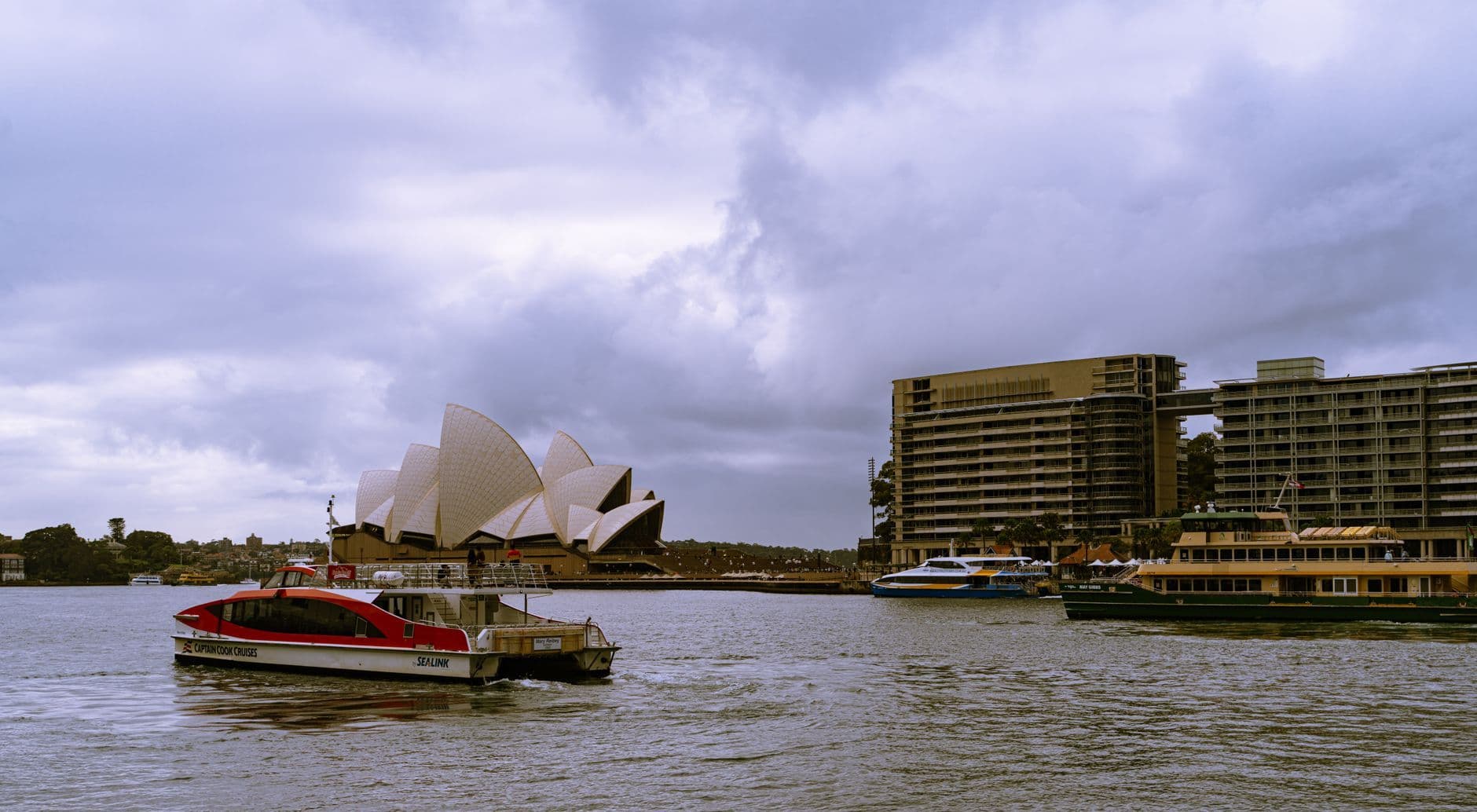
Australia
Coastal cities, vast deserts and coral reefs
- Cities published
- 1
- Population
- 27.5M
- Area
- 7,688,287 km²
- Time zones
- UTC+8 → UTC+10
- Official languages
- No official language
- Capital
- Canberra
The cities
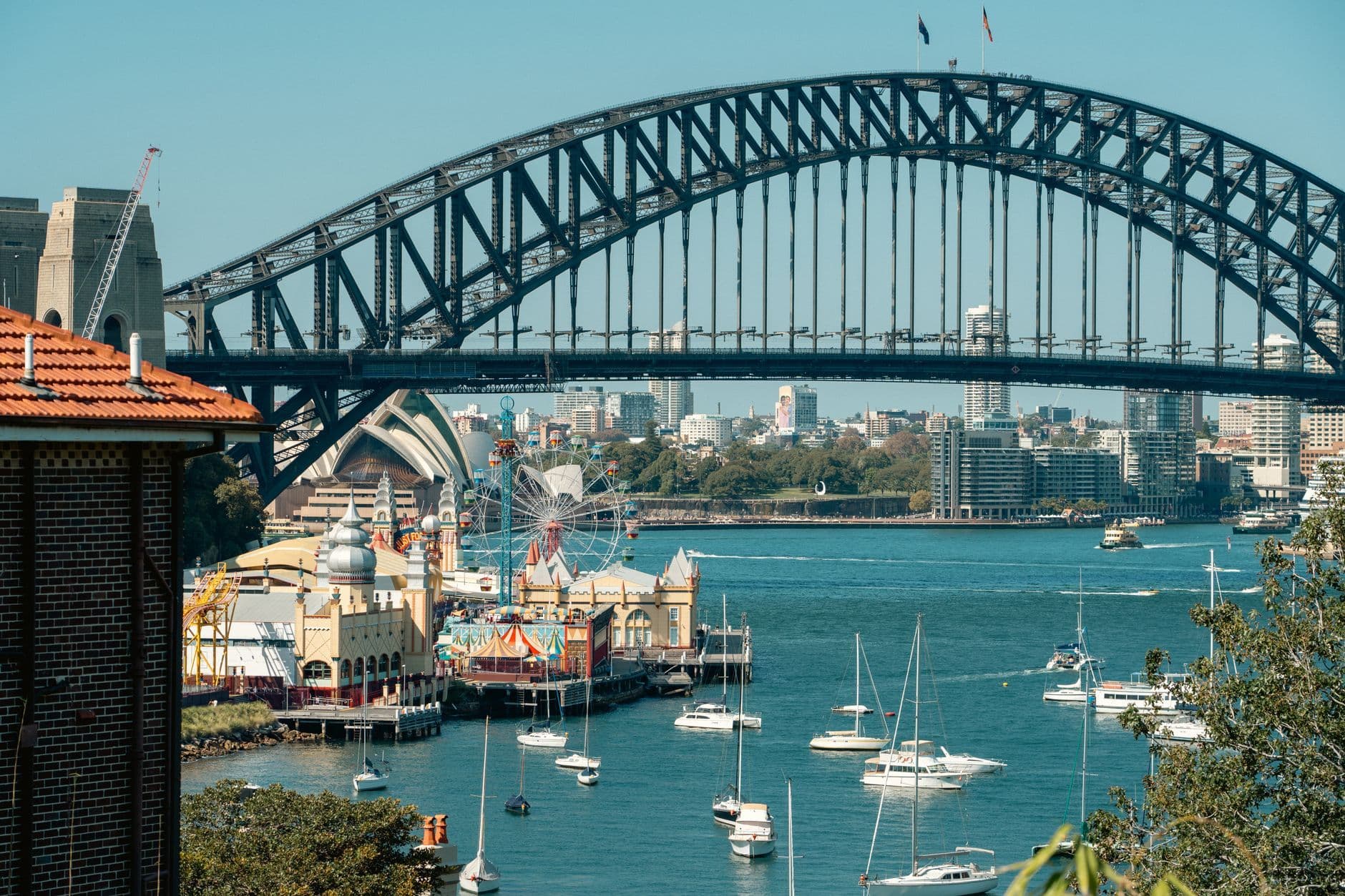
Cities to discover in Australia
Distinctive, lesser-known cities picked by our editors.
Australia travel guide
Australia brings together oceanfront cities, endemic wildlife, Aboriginal cultures and landscapes separated by continental-scale distances. Sydney offers urban beaches, multicultural neighbourhoods and an unmistakable harbour; Melbourne, Brisbane, Perth and Adelaide are gateways to coasts, vineyards and national parks. The Great Barrier Reef and the Outback call for different itineraries and travel seasons.
A trip can focus on the east coast, cross the Red Centre between Alice Springs and Uluru, or explore Tasmania and Western Australia. Domestic flights and rental cars are often essential: Sydney and Perth are about 3,300 kilometres apart as the crow flies, while many natural sites lie hours from the main cities.
Geography
Australia occupies the main continental landmass of Oceania and includes Tasmania and numerous smaller islands. Its population is concentrated along the east, south-east and south-west coasts; the interior, dominated by deserts and semi-arid areas, is sparsely populated. The Great Dividing Range runs along much of the east coast, while the Murray–Darling Basin stretches across the south-east.
To plan an itinerary, it is useful to divide the country into the east coast, the tropical Top End, the Red Centre, the temperate south, Tasmania and Western Australia. Road distances of more than 500 kilometres between stops are common.
Climate
Australia's climate ranges from tropical conditions in the north to temperate weather in the south, with vast desert areas inland. Darwin and the Top End have a dry season from May to October, followed by a hot, humid wet season from November to April. In the south, the seasons are opposite to those in Europe: summer runs from December to February and winter from June to August.
Along the southern coasts, summer highs are often between 25 and 30°C; in the Outback, they can exceed 40°C. Winter nights inland can fall below 0°C.
Culture
Aboriginal and Torres Strait Islander cultures preserve traditions connected to Country, Dreaming stories, rock art and more than 250 historic language groups. English is the country's de facto national language, alongside Indigenous languages and those spoken by its many migrant communities.
The cuisine includes native ingredients, seafood, barbecues, and Asian and Mediterranean influences; wine comes mainly from South Australia, Victoria, New South Wales and Western Australia. Access and photography restrictions must be respected at sacred sites. Tipping is not compulsory, while customs controls on food and biological materials are strict.
Getting around
The main airports are Sydney, Melbourne, Brisbane and Perth; domestic flights also connect Darwin, Adelaide, Hobart, Cairns and Alice Springs. Flying is the quickest option between distant coasts, while regional buses and trains mainly serve the more populated corridors. The long-distance Indian Pacific, The Ghan and Great Southern trains are tourist experiences rather than fast transport.
To understand how to get around Australia, bear in mind that traffic drives on the left and many rural areas have few petrol stations. A car is useful along the coasts; in the Outback, water supplies, suitable insurance cover and checking road conditions are essential.
When to go
When to visit Australia depends on the region. From May to October, the tropical north has drier weather, generally accessible roads and lower humidity. The south, Sydney and Tasmania are better from October to April, while April to May and September to October help avoid the heat in the Red Centre.
Peak season coincides with Christmas, January, Easter and school holidays; flights and accommodation cost more, especially during Sydney New Year's Eve and the Australian Open in Melbourne. The southern summer can bring bushfires to the south and tropical cyclones to the north; from November to April, it is advisable to check weather warnings and road conditions.
Fun facts
- The Great Barrier Reef extends for more than 2,300 kilometres along the Queensland coast.
- Canberra was chosen as the site of the federal capital in 1908, following the rivalry between Sydney and Melbourne.
- K’gari, off the coast of Queensland, is recognised as the world's largest sand island.
- Uluru rises about 348 metres above the surrounding plain and has a circumference of around 9.4 kilometres.
- The Eyre Highway crosses the Nullarbor and includes a straight stretch measuring 146.6 kilometres.